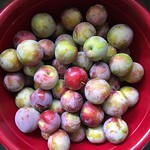
 eat a plum
Coffee
The first European coffee house opened in Constantinople - now Istanbul - in 1475. With it came a fresh alternative to alcoholic drinks, a way to fill mornings, afternoons and even evenings with energy and industry instead of progressive intoxication. You don’t have to go as heavy as Balzac - reportedly consumed (()) - to experience the additional desire and ability to get things done that coffee, along with other caffeinated beverages like tea and mate, brings. The “penny universities” of London in the early enlightenment brought the world’s knowledge to you for a penny.
Coffee enjoyment and popularity has come in three “waves”:
- First wave coffee involved industrialized delivery of high quality, affordable coffee to any market
- Second wave coffee brought premium coffee to most markets
- Third wave coffee was all about artisan coffee from specific sources
Highlights
- Coffee is an excellent source of Fluoride
Quantity
Nutrition Facts
1 serving
Serving size
150g (about 1 cup)
Total Amounts
Calories
2
% Daily value*
Total Fat 0g
Sodium 0mg
(Personalize) 0.0%
Protein 0g
(Personalize) 0.3%
Riboflavin 0.114 MG
8.8%
Pantothenic acid 0.381 MG
2.4%
Niacin 0.287 MG
1.8%
Thiamin 0.021 MG
1.8%
Folate 3.000 UG
0.8%
Choline 3.900 MG
0.7%
Vitamin K 0.150 UG
0.1%
Vitamin B-6 0.002 MG
0.1%
Vitamin E 0.015 MG
0.1%
Fluoride 136.050 UG
3401.3%
Potassium 73.500 MG
2.1%
Manganese 0.034 MG
1.5%
Magnesium 4.500 MG
1.1%
Phosphorus 4.500 MG
0.6%
Zinc 0.030 MG
0.3%
Calcium 3.000 MG
0.3%
Iron 0.015 MG
0.2%
Copper 0.003 MG
0.0%
*
The % Daily Value (DV) tells you how much a nutrient in a serving of food contributes to a daily diet. 2,000 calories a day is used for general nutrition advice.